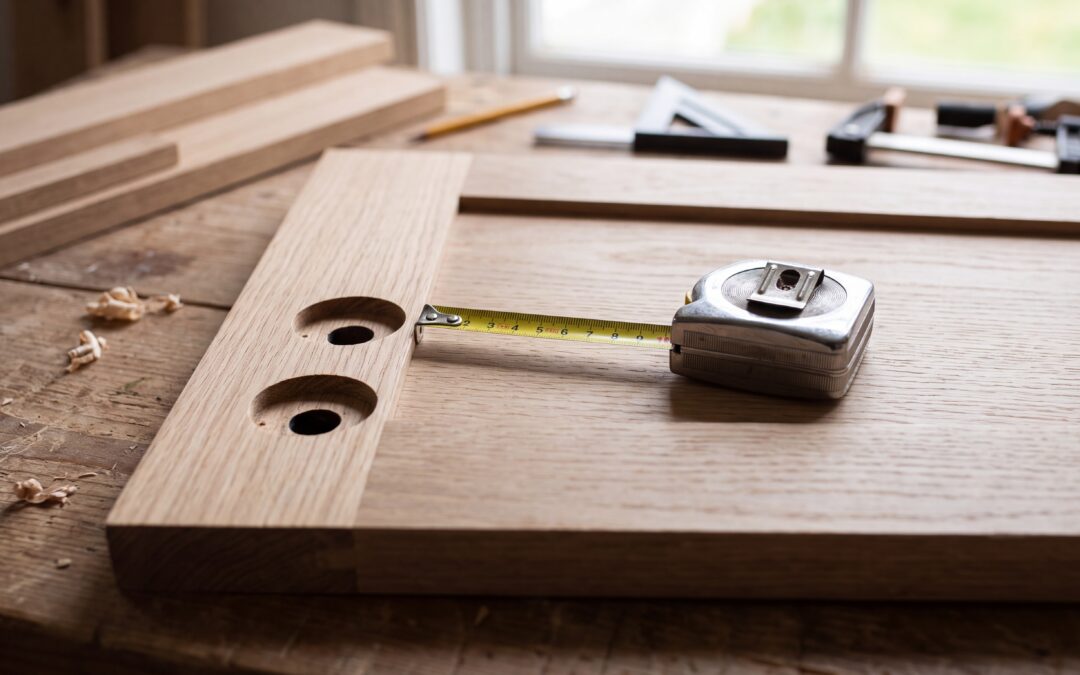
Updating your kitchen with fresh cupboard doors is one of the quickest ways to transform your home. However, ensuring your replacement doors fit like a glove depends on getting the technical details right. Learning the correct method for measuring hinge positions will save you time, effort, and unnecessary hassle when installing your new doors.
When ordering replacement doors, getting precise hinge hole locations means your new doors will line up effortlessly with your existing cabinet frames. Following a simple, step-by-step approach makes the entire process straightforward, even if you are new to DIY.
Tools You Will Need
Before you begin measuring hinge positions, gather a few basic items to make sure your figures are accurate:
- A sturdy steel tape measure (avoid fabric tape measures as they can stretch)
- A pencil and notepad to jot down your dimensions in millimetres
- Your existing kitchen cupboard door removed from the cabinet
How to Measure Hinge Hole Locations
Kitchen cabinet doors usually feature circular recess holes (known as hinge cups) drilled into the back of the door. When taking your measurements, always work in millimetres (mm) for exact accuracy. Take a look at our complete measuring kitchen doors guide for extra advice on full door dimensions.
1. Measure the Top Hinge Centre
Lay your original door flat on a clean, stable surface with the back facing upwards. Place the end of your tape measure against the top edge of the door and measure straight down to the centre point of the top hinge hole. Make sure you measure directly to the middle of the circular recess, not to its edge.
2. Measure the Bottom Hinge Centre
Next, place your tape measure against the bottom edge of the door and measure up to the centre of the bottom hinge hole. While many standard doors use a symmetrical measurement (such as 100mm or 125mm from each end), older or custom cabinets can vary, so always measure both top and bottom individually.
3. Check for Additional Hinge Positions
Taller cabinets or heavy doors often require three or four hinges. If your door has additional hinge holes, measure from the top edge of the door straight down to the centre of each additional hinge hole. Jotting these down in order from top to bottom keeps your notes clear and organised.
4. Verify Hinge Cup Diameter and Edge Offset
Standard kitchen hinges generally use a 35mm diameter hinge cup. To ensure your hinges seat properly, measure from the outer vertical edge of the door to the centre of the hinge hole. On standard UK units, this edge offset is usually 22.5mm.
Choosing the Right Cabinet Hinges
Once you have measured your hinge positions, ensure you select hardware that matches your cabinet style. Choosing high-quality components, such as a Hettich 110° Soft-Close Hinge & Plate for standard units or a Hettich 165° Soft-Close Hinge for corner cupboards, guarantees smooth operation and long-lasting performance. You can explore our full selection of door hinges to find the ideal hardware for your project.
Final Tips for Accurate Measuring
Double-checking your numbers before ordering custom doors is essential. Review our guide on the importance of measuring correctly for kitchen doors to avoid costly mistakes. When buying made-to-measure doors, simply supply these top and bottom hinge centre measurements, and your doors will arrive pre-drilled and ready to hang.
Once your new doors are attached, complete your makeover by reading our helpful guide on how to install kitchen door handles for that perfect finishing touch.