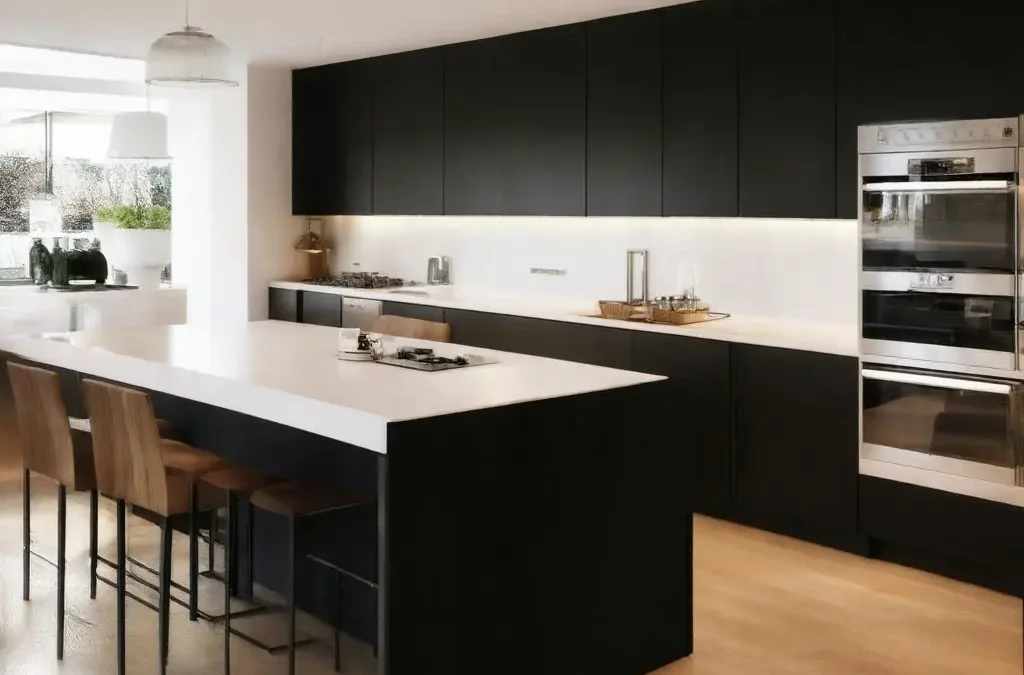
A recent viral makeover split opinion when beautiful solid wood kitchen units were painted matt black. Some applauded the bold, contemporary statement; others felt the new colour absorbed light, amplified fingerprints and hid the warmth and character of the timber. The debate is useful, because it cuts to the heart of finish choice: how surface sheen and colour shape light, maintenance, and perceived quality.
-
Matt black: A sophisticated, design-led look that reduces glare and hides slight surface undulations. However, dark matt surfaces can mute natural light, make smaller rooms feel tighter, and show oils and fingerprints—especially near handles. High-quality matt lacquers reduce marking and clean well, but expect more frequent wipe-downs in busy households.
-
Natural wood: Timber doors—solid or veneered—bring texture and depth, reflecting light softly while adding visual warmth. Grain variation reads as quality. Clear finishes show wear gracefully, but oil and wax finishes need periodic maintenance. If your room lacks natural light, staying lighter in tone (oak, ash, beech) preserves brightness.
-
High gloss: A smart option for compact or low-light kitchens. Gloss bounces light around, visually widening the space. Fingerprints are visible on darker gloss colours but wipe off easily. Factory-sprayed gloss doors deliver a mirror-flat surface that is hard to achieve consistently with DIY paint.
Perceived quality is as much about consistency as it is about material. A flawless, factory-applied coating—matt or gloss—signals precision. Equally, a well-cared-for timber door with crisp edges and even sheen reads as premium. The right choice hinges on your room’s natural light, traffic level, and the experience you want: cocooning and dramatic, warm and tactile, or bright and polished.
Paint or replace? Choosing the right route for your doors and panels
Painting can be the most economical upgrade—if the doors are sound, the style suits your plan, and you have the time to prepare properly. Replacing doors and end panels is often the faster route to a factory-quality finish and a style leap.
When to paint existing doors
- Door condition: Solid wood or quality MDF doors with intact edges and stable joints are good candidates. Avoid swollen, peeling or blown laminate; paint cannot correct structural issues.
- Substrate matters:
- Wood/MDF: Degrease thoroughly (sugar soap), sand to a uniformly dull surface (P180–P240), fill dings, and spot-prime bare areas. Use a high-adhesion primer under waterborne enamel or polyurethane topcoats.
- Laminate/melamine: Use a dedicated adhesion primer formulated for laminates; scuff-sanding alone is rarely enough. Follow with hard-wearing enamel or 2K polyurethane for durability.
- Spraying vs rolling: HVLP or airless spraying yields the most even, factory-like finish, particularly on gloss. Not everyone has the space or equipment. High-density foam rollers and good-quality brushes can produce a near-sprayed look on matt and satin finishes if you maintain a wet edge and de-nib between coats.
- Durability and cure: Hard-wearing systems (acrylic enamel, waterborne polyurethane, or 2K products) outperform basic wall paints. Allow full cure (often 7–14 days) before heavy use; re-hang carefully with felt pads to protect fresh coatings.
When replacing is the better option
- You want a style shift: From routed cathedral doors to sleek handleless, or from dated vinyl wrap to crisp shaker profiles—changes that paint cannot achieve.
- Damage or delamination: Chipped edges, swollen cores, or peeling foil wraps call for replacement, not paint.
- Consistency and speed: Made-to-measure replacement doors and end panels deliver a uniform, factory-sprayed finish in matt or gloss with square, crisp edges—installed in a day with minimal disruption.
- Hardware upgrade: New soft-close hinges, drawers and storage internals can be added at the same time.
Doorfinder offers an extensive range of replacement kitchen and wardrobe doors to suit these scenarios: high gloss doors from £10.06, handleless from £13.01, matt from £11.65, and shaker doors from £21.94, plus wardrobe doors from £14.27. Matching end panels, plinths and accessories—including hinges, handles and storage solutions—ensure a complete, coherent result. With a lowest price guarantee, expert advice and free UK mainland delivery, you can achieve a refined look without the refit price tag.
Styles that change the room fast
-
Handleless for sleek modern lines: Minimal visual noise, continuous runs and a contemporary feel. Great in open-plan spaces. Pair with matt neutrals for calm minimalism or gloss in pale colours to maximise light. Doorfinder’s handleless doors start from £13.01, with matching rails and end panels to complete the look.
-
Shaker for timeless texture: The framed centre panel adds depth without fuss. Shaker adapts to both classic and modern schemes: choose warm neutrals for heritage charm or deep tones for modern contrast. Starting from £21.94, it’s an elegant way to refresh dated profiles while keeping character.
-
Matt for soft minimalism: Low-sheen, tactile surfaces that photograph beautifully and hide minor imperfections. Ideal in larger or brighter rooms where light levels are generous. Doorfinder’s matt doors start from £11.65, balancing design appeal with practicality.
-
Gloss for small spaces: High reflectance makes compact kitchens feel bigger and brighter, especially in whites and soft greys. Gloss doors from £10.06 offer a cost-effective route to a bright, contemporary finish.
For bedrooms, swapping dated wardrobe fronts for fresh matt, gloss or shaker doors can unify a scheme quickly. Wardrobe doors from £14.27 allow for a coordinated home without the cost of new carcasses. Add considered details—brushed handles, soft-close hinges, internal pull-outs—to complete the transformation.
Inset look without headaches, plus budget, time and ordering essentials
Inset vs overlay doors
- True inset doors sit flush within the cabinet frame. The look is beautifully tailored but demands exceptional accuracy, perfectly square carcasses, and fine-tuned hinge adjustments. Even small seasonal timber movement can cause binding.
- Overlay doors sit over the cabinet edges on concealed hinges. They are forgiving, quick to install and easy to adjust.
Achieving an “inset-inspired” look without the pain
- Opt for made-to-measure overlay doors sized to create a slender, consistent shadow gap around each opening. Pair with simple handles or push-to-open mechanisms to emphasise clean lines.
- Use standard 35 mm cup concealed hinges on adjustable plates for reliable alignment and long-term stability—no special joinery required.
Budget and time: an honest comparison
- Painting: Lowest material outlay, particularly if you own basic tools. Expect to invest significant time in preparation, masking and curing—often several evenings or a long weekend for an average kitchen, plus patient handling for a week while coatings harden.
- Replacing doors and panels: Higher upfront cost per door, but you gain precision, instant style change and durable finishes. Because doors arrive finished and drilled to specification, many DIYers complete a full swap in a day or two. It is typically a fraction of the cost of a full kitchen or wardrobe replacement.
Measuring basics
- Count every door, drawer front and end panel. Note handedness (left/right hinges) and whether each is full or half overlay.
- Measure existing doors to the millimetre: width × height for each item. Note hinge cup centre positions from the top/bottom edges and door edge to match existing drilling.
- Check carcass squareness and reveal consistency. If in doubt, order one trial door first.
- For end panels and plinths, measure visible faces and add allowance for scribing to floors and walls.
Ordering tips
- Request sample swatches to confirm colour and sheen under your lighting. Doorfinder provides swatches so you can assess matt vs gloss or colour variants with your worktops and splashbacks.
- Consider mixing finishes—matt base units with gloss wall units, or timber-effect panels with painted doors—for layered depth.
- Upgrade the touchpoints: new handles or a handleless rail, soft-close hinges, and internal organisers deliver a perceptible step up in day-to-day quality.
- Build in a small contingency: order a spare handle and a couple of extra hinge plates to keep the project on schedule.
- Take advantage of Doorfinder’s expert advice, lowest price guarantee and free UK mainland delivery. The 24/7 online service makes it easy to order when it suits you.
Quick installation steps
- Prepare: Clear worktops, protect floors, and set up a clean surface for handling new doors. Label every old door before removal to keep positions straight.
- Remove: Unscrew doors from hinge plates; keep screws and plates organised.
- Fit new hinges to doors (if not pre-fitted), using the specified cup positions. Mount hinge plates to carcasses if you are upgrading.
- Hang and adjust: Use the three-way adjustments on concealed hinges to align gaps consistently. Fit handles or rails; add bumpers for quiet closing.
- Finish: Install end panels and plinths, scribe neatly to walls and floors, and seal edges where appropriate. Step back and fine-tune reveals for a polished, factory-level presentation.
Your decision checklist
Use this to decide whether to paint, replace, or mix approaches.
Room and light
- How much natural light do you have? Low light favours lighter colours and/or gloss to bounce light; high light tolerates deeper matt tones.
- Do you want a cocooning mood (darker matt), a warm natural feel (timber), or maximum brightness (pale gloss)?
Condition and style
- Are doors structurally sound with stable edges and joints? If not, replacement is prudent.
- Does the current profile suit your desired style? If you want handleless or shaker from a routed or dated style, replacement will be more satisfying.
Skills, time and space
- Do you have space to spray or a controlled area to roll and cure doors for up to two weeks? If not, replacing is faster and cleaner.
- Are you comfortable with measuring and hinge alignment? With made-to-measure, most DIYers can complete a swap confidently.
Budget
- Is lowest upfront cost the priority? Painting wins if the substrate is suitable.
- Seeking a factory-quality finish and long-term durability at a lower price than a refit? Replacement doors and end panels offer strong value—check Doorfinder’s starting prices to plan.
Maintenance tolerance
- Are you happy to wipe fingerprints more often (dark matt or dark gloss), or would you prefer forgiving mid-tones and textures?
- Will you maintain oiled/waxed timber, or do you prefer low-maintenance lacquers?
Scope and extras
- Do you need matching end panels, plinths and fillers for a complete look?
- Would new handles, soft-close hinges or internal storage upgrades make daily use better?
Confidence check
- Order colour and finish swatches; test under your lighting at different times of day.
- Measure twice, order once; consider a single trial door before placing the full order.
- Lean on expert advice—Doorfinder’s team can help you select finishes, confirm hinge specs and streamline your basket, with free UK mainland delivery and a lowest price guarantee.
Whether you choose to paint, replace, or combine both, a considered plan will protect your budget and deliver a result you will enjoy for years. With the right finish, style and components, you can refresh kitchens and wardrobes decisively—without regret.