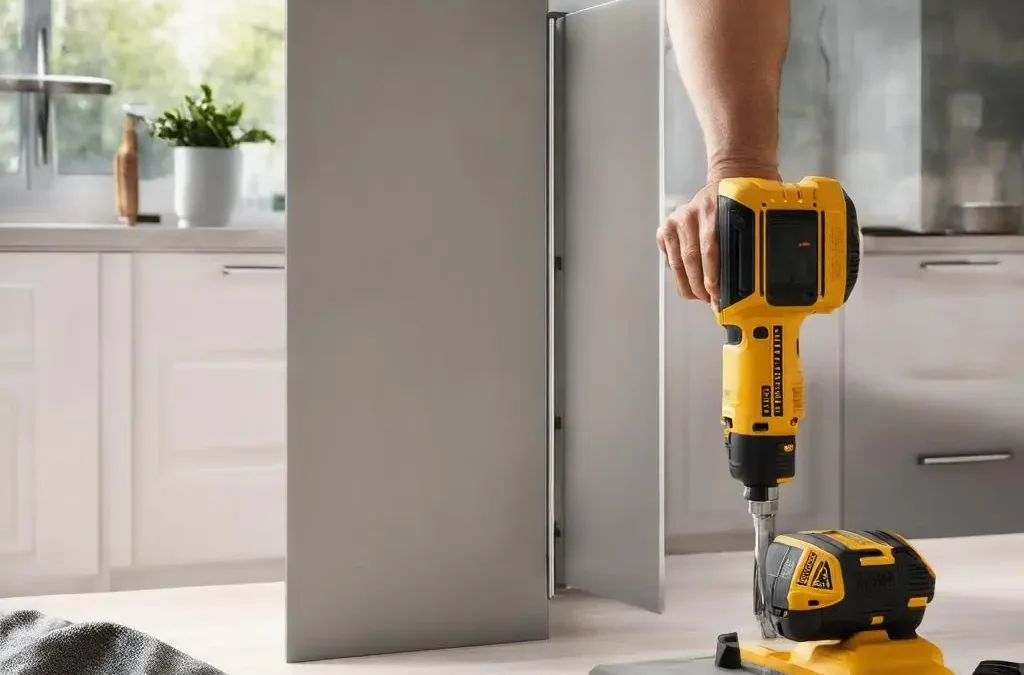
If your cabinets are structurally sound but look tired, replacing doors, drawer fronts, end panels and handles offers a fast, low‑mess, and budget‑friendly transformation. Rather than stripping out carcasses, plumbing and worktops, you retain the bones of your kitchen and refresh only the visible faces. The result is a contemporary look, completed in a single weekend, with minimal disruption and cost.
Doorfinder specialises in replacement doors, panels, units and accessories for kitchens and bedrooms, with a focus on quality at unbeatable prices. With high gloss doors from £10.06, matt from £11.65, shaker from £21.94 and handleless from £13.01, there is a style to suit every scheme and budget. Add compatible hinges, soft‑close options and matching panels for a seamless finish—and enjoy expert advice, a lowest price guarantee and free UK mainland delivery via 24/7 online ordering.
Plan and Measure with Confidence
Successful results start with careful planning and accurate measurement.
-
Audit your layout:
- Count the number of doors, drawer fronts and visible end panels.
- Note special items: corner units, integrated appliance doors, tall housings and filler pieces.
- Check carcass condition (water damage, loose fixings, swollen edges). Address any issues before fitting new fronts.
-
Measure existing fronts:
- Remove one door and measure its height and width to the nearest millimetre.
- Measure several doors to confirm consistency; kitchens often mix sizes.
- For drawer fronts, measure the visible face only.
- Note hinge positions from the top and bottom edges to the centre of each hinge cup. This helps you choose pre‑drilled options or plan re‑drilling if needed.
-
Confirm hinge type:
- Most modern kitchens use 35 mm concealed (cup) hinges. Identify whether yours are clip‑on or screw‑fix and whether they are full overlay, half overlay or inset relative to the cabinet side.
- If you intend to reuse hinges, ensure cup and plate compatibility. If upgrading to soft‑close, choose integrated soft‑close hinges or clip‑on dampers compatible with your plates.
-
End panels and fillers:
- Measure any visible cabinet sides and island ends. Panels are typically cut slightly oversize and scribed to the wall or floor for a neat fit.
- Record plinth (kickboard) height and any open shelf ends to ensure a consistent finish.
-
Handle positions:
- If retaining existing hole centres, measure the spacing precisely (common centres include 96 mm, 128 mm, 160 mm, 192 mm, etc.).
- If changing handle style, decide whether to fill and redrill or order doors undrilled and place new holes to suit.
Tip: Create a simple schedule listing each cabinet (e.g., “Base 600 sink – 715 × 596 door – 2 hinges at 100/500 mm”). This becomes your ordering and fitting checklist.
Select Styles, Panels, Hinges and Handles
Your chosen finish sets the tone of the entire room. Doorfinder’s range helps you achieve the desired look at an accessible price point.
-
Door styles and indicative starting prices:
- High gloss from £10.06: reflective, contemporary, brightens smaller kitchens.
- Matt from £11.65: smooth, modern, hides fingerprints better than gloss.
- Handleless from £13.01: sleek minimalism with integrated rails or J‑pull profiles.
- Shaker from £21.94: timeless framed design, ideal for both classic and modern schemes.
-
Colour and coherence:
- Choose a colourway that complements worktops, splashbacks and flooring.
- For a seamless look, order matching end panels and, where needed, cornice/pelmet details to tie wall units together.
-
Hinges and soft‑close:
- Select quality 35 mm concealed hinges matched to your overlay type.
- For quieter operation, specify soft‑close hinges or add soft‑close dampers. Confirm door thickness compatibility and plate type.
-
Handles and knobs:
- Coordinate metallic finishes (e.g., brushed nickel, chrome, black) with taps and appliances.
- If you prefer a clean façade, handleless doors or discreet edge pulls reduce visual clutter.
-
Accessories and finishing pieces:
- Consider new plinths, filler strips and cover caps for a truly “as‑new” appearance.
- Storage upgrades (pull‑outs, corner solutions, tray dividers) can be added without changing the carcass, boosting functionality alongside aesthetics.
Budget, Tools and Timeline
A weekend makeover is most efficient with a realistic budget and the right tools to hand.
-
Indicative budget (typical 10–14‑front kitchen; actual costs vary by size and style):
- Doors/drawer fronts: approximately £200–£600+ depending on style and dimensions (using Doorfinder’s starting prices as a guide).
- Hinges and plates: £40–£90 for a full set; add £20–£60 for soft‑close upgrades.
- Handles/knobs: £30–£120 depending on design and quantity.
- End panels: typically £30–£80 each depending on size and finish.
- Consumables (screws, adhesive caps, sandpaper, fillers): £10–£30.
- Estimated total: from around £300 to £900+ for many projects, excluding optional storage upgrades and specialist trim.
-
Tool checklist:
- Cordless drill/driver with PZ2 and small pilot bits
- Hand screwdriver (PZ2) for final tightening
- Tape measure, pencil, sharp utility knife
- Combination square and/or marking gauge
- Spirit level and a straightedge
- Masking tape for clean drilling and marking
- Soft pads or blanket to protect new fronts during fitting
- Clamp(s) and a hinge/handle drilling jig (optional but time‑saving)
- Wood filler, touch‑up pen and fine sandpaper for minor repairs
- Personal protective equipment (safety glasses, gloves)
-
Weekend timeline (guide):
- Friday evening (optional): Finalise measurements; place your order online with Doorfinder (24/7); clear work surfaces; label existing doors.
- Saturday morning: Remove old doors and handles; clean carcasses; unpack and check new components; pre‑fit hinges and handles to new doors.
- Saturday afternoon: Fit end panels and any fillers; scribe and trim as required; pre‑drill carcass where necessary.
- Sunday morning: Hang doors; align and adjust; install soft‑close dampers.
- Sunday afternoon: Fit plinths/cornice (if using); final polish and tidy.
Installation Steps, Pitfalls and Pro Tips—Plus How Doorfinder Helps
-
Step‑by‑step fitting:
1) Prepare the space:- Empty cabinets enough to work comfortably. Protect floors and worktops.
- Photograph hinge positions and handle placements as a reference.
2) Remove existing fronts: - Detach doors by releasing the hinge clips or unscrewing from plates. Keep screws organised.
- Remove handles and set aside if reusing.
3) Clean and inspect: - Degrease cabinet faces and edges. Tighten any loose carcass screws.
- Repair minor chips on carcass edges with filler.
4) Fit end panels: - Dry‑fit first. Scribe to walls/floors where needed. Cut carefully with a fine‑tooth blade; support the panel to prevent chipping.
- Fix with screws from inside the carcass (pre‑drill) and/or suitable adhesive, keeping faces flush.
5) Prepare new doors: - If pre‑drilled, fit hinges to cups; if undrilled, mark and drill accurately using a hinge jig for 35 mm cups and specified setback.
- Fit handles, drilling from the face side through masking tape to minimise breakout.
6) Hang and align: - Clip hinges onto plates or fix plates to carcasses at marked heights.
- Adjust using the hinge screws: depth, height and side‑to‑side to achieve consistent gaps (typically 2–3 mm).
7) Add soft‑close and finish: - Clip on soft‑close dampers or confirm integrated mechanisms operate smoothly.
- Apply cover caps, refit plinths/cornice and wipe down surfaces.
-
Common mistakes to avoid:
- Rushing measurements. Always double‑check sizes and hinge positions before ordering.
- Mixing overlay types. Ensure hinges and plates suit your cabinet configuration.
- Drilling without support. Use masking tape and back up the exit side to avoid splintering.
- Skipping scribing on panels. Unscribed ends can highlight uneven walls and floors.
- Over‑tightening screws. This can strip fixings or distort hinges, making alignment difficult.
- Ignoring plinth height and appliance clearances. Doors must open freely without fouling.
-
Time‑saving tips:
- Label every old door and hinge location; use the labels to map new fronts.
- Pre‑drill and fit all hinges and handles at a bench before hanging.
- Set up a simple spacer block to keep consistent gaps between doors.
- Work in zones (e.g., wall units first, then base units) to streamline adjustments.
- Keep a magnetic tray for screws and plates to prevent loss.
-
Maximising value with Doorfinder:
- Lowest price guarantee: Keep your project on budget by taking advantage of Doorfinder’s commitment to market‑leading prices across styles, from high gloss and matt to shaker and handleless.
- Expert support: If you are unsure about hinge types, overlay, or panel sizing, Doorfinder’s specialists can guide you to the correct options for a smooth install.
- Free UK mainland delivery: Save on logistics and simplify planning—ideal when coordinating a weekend makeover.
- 24/7 online ordering: Finalise choices and place orders at your convenience, with clear product pages for doors, panels, hinges, handles and storage accessories.
With accurate measurements, the right components and a structured plan, you can achieve a showroom‑fresh kitchen over a single weekend—without the cost or mess of a full refit. Doorfinder’s combination of quality, value and support helps ensure your project runs to time, looks seamless and stays firmly on budget.