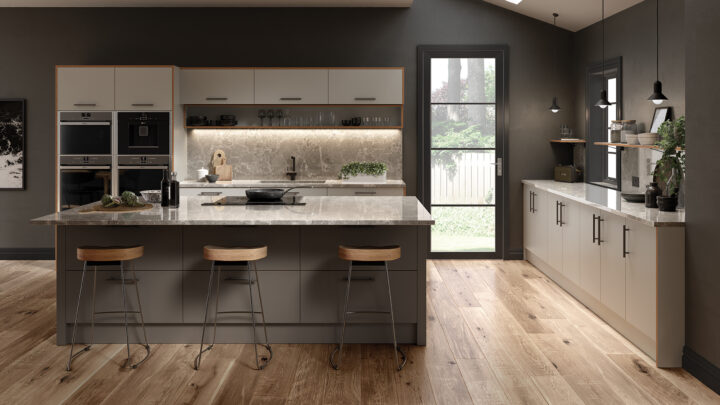
Plan Your Weekend: Why Replace Doors, Not Units
Refreshing a dated kitchen does not require ripping out sound units. If your carcasses are straight, dry, and structurally sound, swapping doors, end panels, plinths, and handles delivers a transformative result for a fraction of the cost and disruption of a full refit. In most homes, this is comfortably a weekend project for a confident DIYer with basic tools.
Doorfinder specialises in replacement doors, panels, units, and components for kitchens and bedrooms. With a lowest price guarantee, expert guidance, and free delivery across the UK mainland, it is designed for homeowners who want quality at unbeatable prices—and results without the mess.
Before you begin, assemble tools and materials:
- Tape measure (metric), square, spirit level, pencil
- Drill/driver with 2 mm–3 mm pilot bits and a 35 mm Forstner bit if you plan to drill hinge cups yourself
- Screw assortment (typically 3.5 mm x 16 mm for hinges and handles), cabinet hinge plates and concealed hinges
- Soft-close dampers or soft-close hinges (optional but recommended)
- Masking tape, handle drilling template, rubber mallet, clamps
- Safety glasses, hearing protection, dust mask
- Touch-up pen, edge tape (if trimming panels), silicone for tidy end seals
- A clean, flat workspace and protective blankets for new fronts
Measure Once, Fit Once: Getting the Numbers Right
Accurate measuring is the single biggest factor in a smooth weekend makeover. Take doors off one at a time, label each cabinet, and note all measurements carefully. Where possible, measure the existing front rather than the carcass opening.
- Door and drawer sizes:
- Measure the full height and width of each existing door and drawer front, to the nearest millimetre.
- Note whether pairs of doors meet centrally (equal widths) and whether you want the same reveal/overlap.
- For corner units, note if the lead door uses a bi-fold hinge.
- Hinge-hole positions:
- Most modern kitchens use 35 mm concealed (cup) hinges. Measure from the top of the door to the centre of the top hinge cup, and from the bottom of the door to the centre of the bottom hinge cup. Record to the nearest millimetre.
- Measure the distance from the hinge-side edge of the door to the centre of the cup. This is commonly around 21–22 mm to the centre, but it varies—measure your existing doors and copy that.
- Record hinge quantity per door (typically two for doors up to c. 900 mm high, three for taller).
- Note hinge type (standard 110° is common; 165° for wide opening or internal drawers; 95°/107° for tight spaces), and check whether the hinge plate is face or carcass mounted.
- Panels, plinths, and fillers:
- End panels usually run floor to worktop; measure height and depth (including any overhangs). Decide if you want panels to sit flush or to create a scribe for uneven walls.
- Plinths (kickboards) typically 150 mm high; measure total run length and note any returns.
- Record any filler pieces and cornice/pelmet lengths you plan to refresh for a fully finished look.
- Handles:
- If you plan to reuse existing handle holes, measure centre-to-centre spacing (e.g., 128 mm, 160 mm, 192 mm). If switching to knobs or different handles, plan new hole positions and fill old holes if reusing old fronts temporarily.
If you prefer not to drill hinge cups yourself, speak with Doorfinder’s experts for guidance on compatible drilling patterns and options. Alternatively, order undrilled doors and follow your recorded measurements precisely.
Choose Your Style: Finish, Form, and Function
Your door style sets the tone of the entire space. Consider light, room size, and the character of your home.
- High gloss doors from £10.06:
- Reflect light, visually expand smaller rooms, and partner well with modern appliances and glass splashbacks.
- Best in uncluttered layouts; pair with discreet handles or push-to-open where appropriate.
- Handleless doors from £13.01:
- Streamlined, contemporary look with easier wipe-down surfaces.
- Ideal for galley kitchens where protruding handles can catch; can also reduce visual noise in open-plan spaces.
- Matt doors from £11.65:
- A refined, understated finish that minimises fingerprints and glare.
- Pairs well with warm woods, brass, or black hardware for a sophisticated palette.
- Shaker doors from £21.94:
- Timeless and versatile—works in period properties and modern homes alike.
- Style with cup pulls and knobs, and consider two-tone schemes (e.g., darker base units, lighter wall units).
Match your doors to panels, plinths, and units for a coherent finish:
- Specify end panels and plinths in the same finish as your doors to avoid shade mismatches.
- For islands and peninsulas, consider contrasting panels for a design statement.
- Ensure unit colours (inside the carcass) complement the door finish if they are visible when doors are open.
Hardware Matters: Hinges, Soft-Close, and Compatibility
Selecting the right hardware ensures smooth operation and longevity.
- Hinges:
- Standard concealed hinges (35 mm cup) suit most applications. Match hinge overlay to your carcass and door arrangement (full, half, or inset overlay).
- Check hinge plate height and mounting style; replacing like-for-like usually simplifies fitting.
- For tall or heavy doors, add a third hinge to prevent sag.
- Soft-close:
- Opt for integrated soft-close hinges for the neatest solution, or clip-on soft-close dampers that retrofit to many standard hinges.
- For drawers, consider soft-close runners where compatible with existing boxes, or selective upgrades on the highest-use drawers.
- Handles and knobs:
- Confirm screw length for your door thickness (commonly 18–22 mm doors). Use handle templates for repeatable, square positioning.
A Simple Budgeting Checklist
Plan your spend and avoid surprises by listing:
- Number of doors and drawer fronts, by size and style
- End panels, plinths, cornice/pelmet, fillers, cover caps
- Hinges (quantity and type), hinge plates, soft-close options
- Handles/knobs and matching fixings
- Screws, bump stops, edge tape, sealants
- Any new units or shelves if replacing damaged carcasses
- Tooling you need to buy or borrow (Forstner bit, clamps, template)
- Contingency (10–15% for adjustments and offcuts)
Use Doorfinder’s starting prices to model scenarios:
- High gloss from £10.06
- Handleless from £13.01
- Matt from £11.65
- Shaker from £21.94
Multiply by quantities, add hardware and panels, and you will typically land at a fraction of a full refit—without the waste or downtime.
Layout and Colour Considerations
- Light and space: In compact kitchens, high gloss or pale matt finishes bounce light. In larger rooms, a mid-tone matt or Shaker can add warmth and depth.
- Two-tone strategies: Darker bases with lighter wall units ground the space while keeping it bright. Try navy/white, graphite/stone, or wood/matt pairings.
- Handle planning: For consistency, keep all handle centre-lines aligned across drawers and doors. In handleless schemes, align rail lines across the run.
- Vertical rhythm: Maintain consistent reveals and sightlines. Door heights for wall units should align under cornices/pelmets; plinths must be level for clean lines.
- Splashbacks and worktops: Choose complementary textures—gloss doors with satin or honed worktops to avoid glare; matt doors with quartz or wood for tactile contrast.
- Appliances: Check door clearances next to ovens and fridges; consider 165° hinges for larder or corner access.
Step-by-Step Fitting: From First Door to Final Adjustments
1) Remove and prepare:
- Photograph each unit front as a reference. Remove doors by unclipping hinges from plates. Bag fixings per cabinet.
- Inspect carcasses for water damage, loose screws, or blown chipboard. Repair or replace fixings; let any damp areas dry thoroughly.
- Clean carcass faces; ensure plinth clips and adjustable feet are sound.
2) Mark and drill (if undrilled):
- Transfer your hinge measurements to the new door. Mark centres with pencil and masking tape to prevent tear-out.
- Use a 35 mm Forstner bit in a drill press or a hand drill with a depth stop. Typical cup depth is around 12–13 mm—do not drill through the door.
- Pre-drill pilot holes for hinge screws (2–3 mm) to prevent splitting.
3) Fit hinges and hang:
- Screw hinges to the door first. Offer the door to the cabinet and clip onto existing plates, or fit new plates aligned to the original positions.
- Check reveals around the door. Use the three-way adjustment on the hinge: side-to-side for even gaps, depth for alignment with the carcass front, and height to level tops and bottoms.
4) Fit handles:
- Decide handle height and orientation. For long bar handles on drawers, centre on the drawer front; for doors, align horizontally or vertically per your design.
- Use a drilling template to keep hole positions consistent. Drill from the front with a sharp bit; de-burr from the rear.
5) Panels, plinths, and finishing:
- Cut end panels to height with a fine-tooth blade; scribe to walls or floors if needed. Fix with screws from inside the carcass or with suitable adhesive where screws are not possible.
- Recut and refit plinths; mitre external corners and use plinth clips for removability. Ensure a continuous, level line.
- Add bump stops, fit cover caps to visible screw heads, and run a neat silicone bead where panels meet walls for a professional finish.
- Wipe all surfaces, then perform a final hinge tune for perfect gaps.
Safety notes: Always wear eye and hearing protection when cutting or drilling. Check for hidden pipes or cables before drilling into walls. Support heavy doors and panels while fitting.
Why Choose Doorfinder for Your Makeover
- Lowest price guarantee: Buy with confidence knowing you are getting market-leading value on replacement doors, panels, units, and accessories.
- Expert guidance: Speak to specialists who can help with hinge compatibility, drilling advice, and finish selection so you fit right first time.
- Free UK mainland delivery: Order online and have everything delivered to your door without additional shipping costs.
- 24/7 online service: Plan, compare, and purchase at a time that suits your schedule.
If you are coordinating your whole home, you can extend the same finishes and savings to your bedroom. Explore Doorfinder’s wardrobe doors range (from £14.27) to create a cohesive look between kitchen and bedroom, or to refresh fitted wardrobes with the same weekend-friendly approach.
Your Weekend, Transformed
With accurate measurements, the right style choice, and reliable hardware, you can replace doors—not units—and achieve a showroom-worthy kitchen in a single weekend. Doorfinder’s quality, price, and support simplify every step, from selecting finishes to final fit. Start with your measurements, choose your preferred style, match the panels and plinths, and enjoy the fastest route to a kitchen you will love to live in on Monday morning.