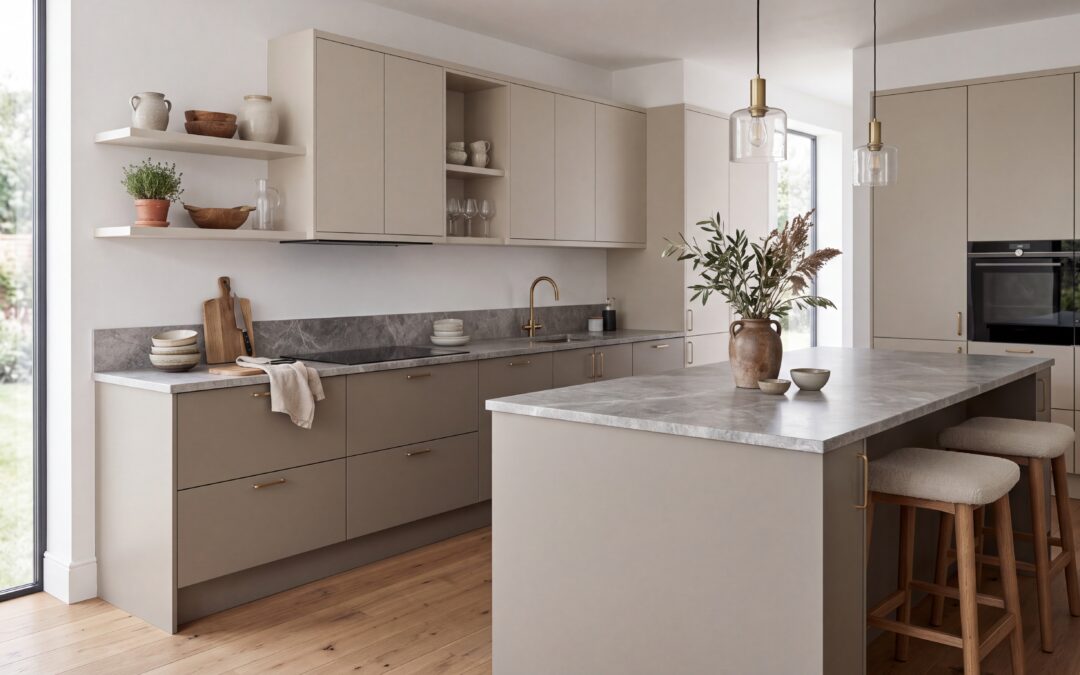
The kitchen is no longer merely a utilitarian space for culinary preparation; it has evolved into the architectural anchor of the modern home. As we progress through 2026, the palette of the heart of the home is undergoing a sophisticated transformation. Homeowners are increasingly moving away from the stark, sterile aesthetics of previous years in favour of richer, more expressive tones. Understanding the latest kitchen colour trends is vital for anyone looking to undertake a highly considered redesign or a targeted aesthetic update.
By exploring these emerging colourways, you can create a harmonious environment that balances timeless elegance with contemporary flair, reflecting a broader design shift towards comfort, tactility, and natural beauty.
The Evolution of Warm Neutrals and Earthy Clays
Whilst crisp whites and cool greys dominated previous eras, this year welcomes a softer, more enveloping approach to neutral schemes. We are seeing a distinct preference for cashmere, oatmeal, and rich, muddy taupes. These shades establish a serene, grounded atmosphere that co-ordinates effortlessly with various architectural features. Indeed, borrowing living-room colour trends to refresh kitchens is a highly effective design strategy, allowing for a seamless transition between open-plan living areas.
To complement these warm neutrals, designers are introducing deep terracotta and clay-toned accents. These earthy hues introduce a subtle warmth and organic complexity without overwhelming the space. They provide an exquisite backdrop for high-quality joinery, ensuring the kitchen feels both welcoming and architecturally refined.
Organic Greens and Deep Oceanside Blues
Nature continues to be a primary source of inspiration for interior design. Building upon the popularity of forest green highlighted in our guide to kitchen cabinet colour trends, the contemporary palette expands into deeper, more atmospheric tones. Olive, sage, and deep botanical greens remain exceptionally popular, introducing a sense of calm and biological connection to the home.
In addition to green, deep navy and dramatic midnight blues are making a prominent statement. When paired with traditional cabinet profiles, such as the classic Bella Tullymore Kitchen Door, these deep blues evoke a sense of heritage and luxury. Alternatively, applying these rich shades to sleek modern kitchen doors creates a striking, sophisticated contrast that defines the room’s focal points.
Tactile Textures and Woodgrain Fusion
Modern kitchen design increasingly relies on texture to elevate colour. Rather than relying solely on painted surfaces, current kitchen colour trends embrace the organic variation of natural timber. Integrating natural timber tones with solid colour blocks is a major design trend, as outlined in our overview of woodgrain kitchen door trends.
Rich walnut, charred oak, and pale ash serve as secondary “colours” in their own right, providing a tactile counterbalance to matt painted cabinets. This blend of organic timber and solid tones creates a layered, bespoke aesthetic that feels curated over time.
Selecting the Perfect Finish: Matt vs High Gloss
Selecting the Perfect Finish: Matt vs High Gloss
The choice of finish is just as critical as the colour itself, as it dictates how light interacts with the cabinet surfaces. Matt finishes dominate for darker hues, absorbing light to create a velvety, sophisticated depth. Conversely, selecting high gloss kitchen doors in softer, reflective tones can amplify natural light, making more compact spaces feel remarkably bright and spacious.
For those pursuing a streamlined, minimalist aesthetic, combining these colours with the handleless kitchen trend allows the chosen colour palette to remain entirely uninterrupted, emphasising form and material purity. Whether you favour a traditional or contemporary aesthetic, our best kitchen door styles UK guide offers comprehensive inspiration for selecting the ideal structure to carry your new colour scheme.