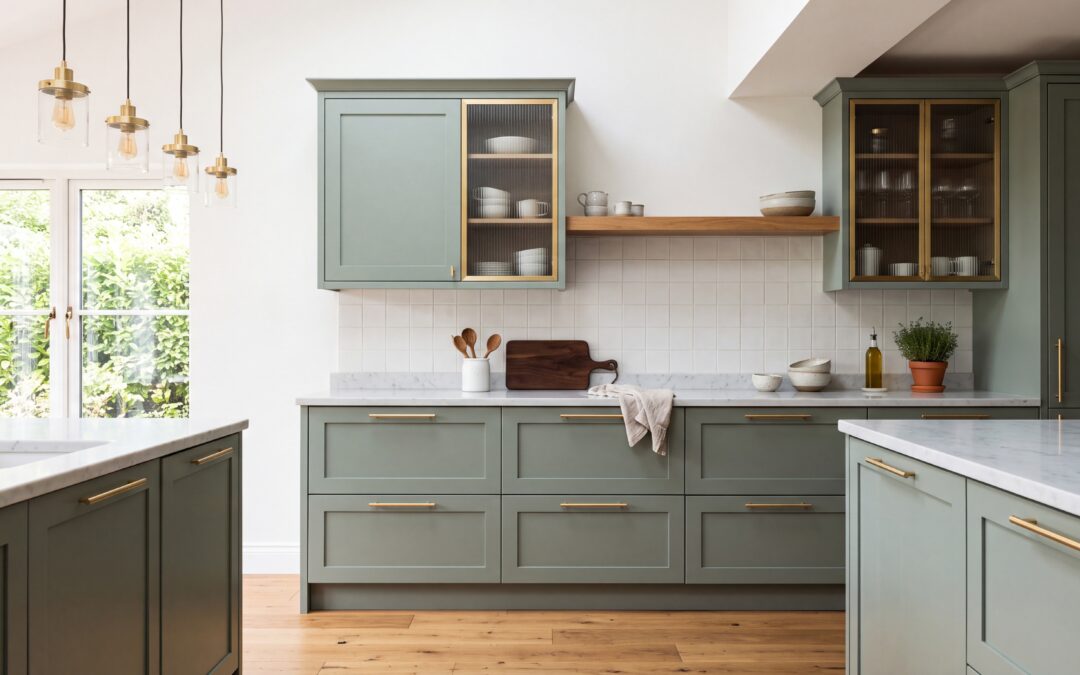
Selecting cohesive kitchen door colour schemes is paramount when orchestrating a sophisticated kitchen refurbishment. Rather than committing to a complete and disruptive rip-out, homeowners increasingly favour updating their aesthetics by replacing cabinet fronts. This approach is not only highly sustainable but exceptionally customisable. Navigating the intersection of light, material, and pigment allows for an elegant outcome that reflects contemporary British design sensibilities. Here, we explore the prominent colour schemes defining kitchen design in 2026.
Earthy Tones and Organic Moods
The contemporary kitchen prioritises calm, grounding colours that evoke a deep connection with the natural world. Building upon the kitchen cabinet colour trends that gained momentum in previous years, we are witnessing a refinement of organic shades. Deep forest greens, rich sage, and complex mineral blues have transitioned from bold, statement options to established, sophisticated classics.
This design shift is heavily influenced by the fluid integration of domestic spaces, where living areas flow seamlessly into culinary zones. Increasingly, living-room colour trends dictate the palettes we choose for kitchen joinery to establish absolute visual cohesion. Incorporating earthy tones on shaker-style fronts or utilising them within modern, flat-panel modern kitchen doors yields a space that feels curated, mature, and remarkably comforting.
Monochromatic Schemes and Sophisticated Neutrals
For those pursuing a minimalist or architectural aesthetic, monochromatic and neutral palettes remain peerless. Crisp, pristine whites have evolved; the modern focus is now on pairing them with tactile materials to prevent a sterile environment. Opting for premium white doors with a supermatt finish offers a clean, contemporary canvas that diffuses light beautifully throughout the room.
To add warmth and subtle complexity, designers are introducing soft cashmere, pebble grey, and taupe. These versatile neutrals are particularly effective when paired with sleek handleless doors, where the absence of hardware highlights the purity of the colour and the clean lines of the cabinetry. Selecting these subtle hues from our complete range of kitchen doors ensures a timeless appeal that easily adapts to shifting interior styling accents over time.
Dual-Tone Schemes: Depth and Contrast
Creating a dual-tone scheme is an excellent technique for adding architectural interest to a standard room layout. A popular execution involves anchoring the space with darker base units—such as indigo blue, graphite grey, or deep forest green—whilst keeping the wall-mounted cabinets in a lighter neutral like alabaster, cashmere, or porcelain. This approach keeps the eye moving and prevents the room from feeling top-heavy, making it exceptionally useful in smaller or darker UK kitchens.
When executing a dual-tone layout, consulting professional kitchen door ideas can help you harmonise the transition between high and low units. Balancing the visual weight between contrasting doors is crucial to achieving a polished, high-end look.
Matching Colour with the Correct Finish and Style
The success of any colour scheme is intimately tied to the door style and finish selected. A high-gloss finish will reflect light, intensifying vibrant pigments and making small spaces appear larger, whereas a supermatt finish absorbs light, giving dark blues and greens an incredibly rich, velvety depth. To find the optimal combination for your home, explore our detailed breakdown of kitchen door styles and consult the comprehensive best kitchen door styles UK 2026 guide. With the correct combination of colour, finish, and design, your kitchen will stand as a testament to thoughtful, modern British design.